Is Your Turf Equipment Ready for 2027? A Facility Manager's Off-Season Audit Guide
When the last events of the season wraps and the leaves are cleared, it's tempting to park the equipment and forget about it until spring. But for facility managers, golf course superintendents, municipal parks teams, and landscaping companies across Ontario, the off-season is one of the most valuable windows of the year. It's the time to take an honest look at your turf maintenance equipment, decide what's working, and plan for what next season will demand.
A structured off-season equipment audit helps you avoid mid-season breakdowns, budget accurately, and head into 2027 with fields, greens, and grounds that are ready from day one. Here's how to approach it.
Why Winter Is the Smartest Time to Plan
During peak season, equipment decisions tend to be reactive. A machine goes down, a field needs attention, and you're scrambling for a repair or rental while play continues. The slower winter months flip that dynamic.
- Time to assess properly. Without bookings and tournaments, crews can inspect machines thoroughly instead of patching problems between events.
- Budget alignment. Many schools, universities, and municipalities set capital and operating budgets over the winter. Documenting equipment needs early puts you in a stronger position when those decisions are made.
- Lead time. Sourcing new equipment, scheduling repairs, and arranging maintenance programs all take time. Planning now means machines and services are lined up before spring demand peaks.
- Canadian conditions. Ontario's freeze-thaw cycles are hard on idle equipment. Inspecting, servicing, and storing machines properly now protects your investment through the winter.
Step 1: Take Inventory by Surface
Start by listing every machine you own or regularly rent, organized by the surfaces it supports. Grouping equipment this way makes gaps much easier to spot.
Artificial Turf Fields
Synthetic surfaces rely on regular grooming, decompaction, and debris removal to stay safe and playable. Core artificial turf maintenance equipment includes grooming machines like the TurfCare TCA1400 and TurfKing TK1802, an Aerator to break up compacted infill, brushing systems, cleaning machines such as the GKB TopClean and TurfSoft TS3, and a Magnet Bar ML1500 for pulling nails, screws, and wire fragments from the surface.
Natural Grass Sports Fields
Natural grass fields need aeration, top dressing, overseeding, and periodic renovation. Review your aerators, including deep tine options like the GKB Deep Tine Aerator that reaches up to 40 cm, seeders such as the Combiseeder, and renovation machines like the Combinator and Sandfiller.
Golf Courses
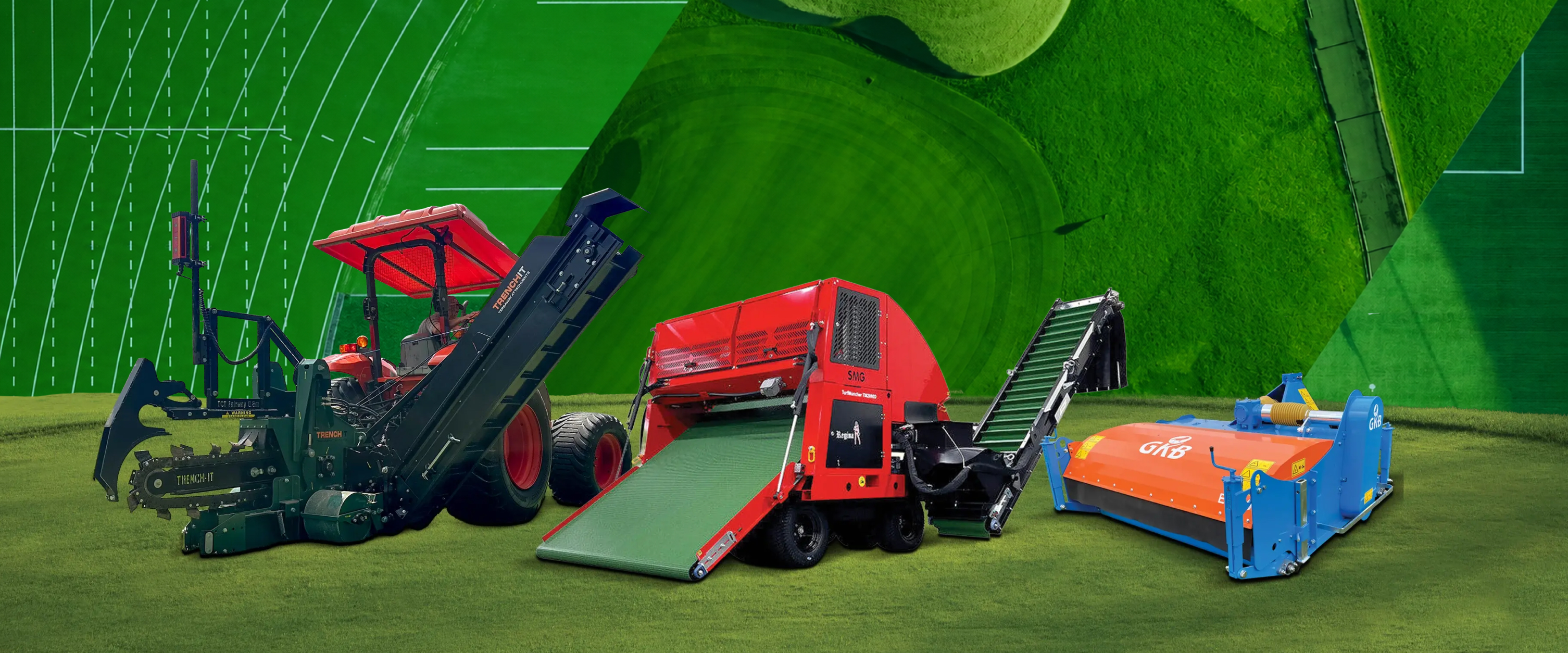
Natural grass greens, fairways, and roughs demand precise top dressing, scarification, and drainage work. Key golf course maintenance equipment includes the MultiSpread line of topdressers, the GKB VCollector for scarifying and collecting organic matter, and the Trench-It Fairway Trencher for irrigation and drainage installations with minimal turf disruption.
Landscaping and Grounds Maintenance
For landscaping companies and municipal grounds crews, efficient leaf and debris management makes a big difference to labour hours. The Leaf-Clean vacuum, with its 1,050-litre container, and the GKB Leaf Reducer, which converts leaf waste into soil improver while cutting disposal costs, are worth evaluating well before next fall.
Step 2: Evaluate Current Performance
Once your inventory is complete, review each machine against a few simple questions:
- Did it perform consistently all season, or did results drop off over time?
- How many unplanned repairs or downtime days did it need?
- Are replacement parts still readily available?
- Has field usage increased beyond what the machine was sized for?
- Is it delivering the surface quality your athletes, golfers, or community expect?
Keep notes as you go. Patterns across a full season tell you far more than a single breakdown.
Warning Signs It's Time to Repair or Upgrade
Repair When
The machine is fundamentally sound but showing normal wear on brushes, tines, bearings, or belts, the issues are isolated, and parts are easy to source. Off-season servicing is the most cost-effective way to extend equipment life.
Upgrade When
Repair costs are climbing year over year, the machine can't keep up with increased field use or a larger surface area, or results have become inconsistent, such as uneven infill distribution or shallow aeration. Upgrading also makes sense when newer equipment would reduce labour, fuel, or chemical use.
Structured Maintenance Packages vs. Ad-Hoc Repairs
Equipment is only half of the equation. Many facilities still manage artificial turf on a call-when-there's-a-problem basis. The challenge is that by the time issues become visible, such as hard spots, matted fibres, low infill, or poor drainage, the damage is already done and repairs cost more.
A structured maintenance program keeps fields performing consistently and makes costs predictable. Clean Turf Canada's artificial turf maintenance packages are built around how a field is used:
- Core Four (every 6 to 8 weeks): Ideal for schools and recreational leagues. Includes field inspection, debris removal, targeted decompaction, fibre reorientation, infill redistribution, and surface levelling.
- Performance Plus (every 2 to 3 months): Built for competitive and high-use fields. Includes deep-extraction grooming of the infill layer, redistribution of infill across high-traffic zones, and surface conditioning to maintain consistent shock attenuation.
- Field Renew (as needed): For heavily compacted or aging fields. Includes edge detailing, deep-profile decompaction, seam and inlay restoration, and optional infill top-ups.
Compared to ad-hoc repairs, a scheduled package means fewer surprises, steadier budgets, safer playing surfaces, and a longer field lifespan. It also reduces the pressure on your own equipment fleet, since Clean Turf Canada brings the machines and expertise to you. Every field is priced custom, so the plan matches your surface and schedule.
Build Your 2027 Plan Now
Use the off-season to work through this checklist:
-
- Complete your equipment inventory and performance notes.
- Schedule repairs and servicing before spring.
- Identify necessary upgrades and request quotes.
- Choose a maintenance package for your artificial turf fields.
- Plan infill top-ups and spring renovation work.
- Bring a clear, documented plan to budget discussions.
Plan Smarter With Clean Turf Canada
As a proud Canadian dealer of GKB, SMG, Trench-It, Guardian, and Earth & Turf, Clean Turf Canada brings real-world field experience and equipment selected for Ontario's climate. Whether you manage artificial turf, natural grass sports fields, a golf course, or municipal grounds, our team can help you evaluate your current equipment and build a maintenance plan that's ready for 2027.